Cuisine
Eastern Mediterranean cooking on the kamado
Greece, Turkey, Lebanon and the rest of the eastern Mediterranean have always cooked over embers: meat on the spit, charred aubergine, flatbread on stone and fresh cheese with fruit. These are their recipes adapted to the kamado.
4 recipes
Eastern Mediterranean cooking, from Greece to Lebanon, uses the kamado in three ways: direct embers to smoke vegetables and mark fruit, a very hot stone for flatbreads, and a rotisserie for layered meat. Almost everything happens between 230 and 300 °C, with smoke as a quiet seasoning and olive oil, yoghurt, tahini and herbs alongside.
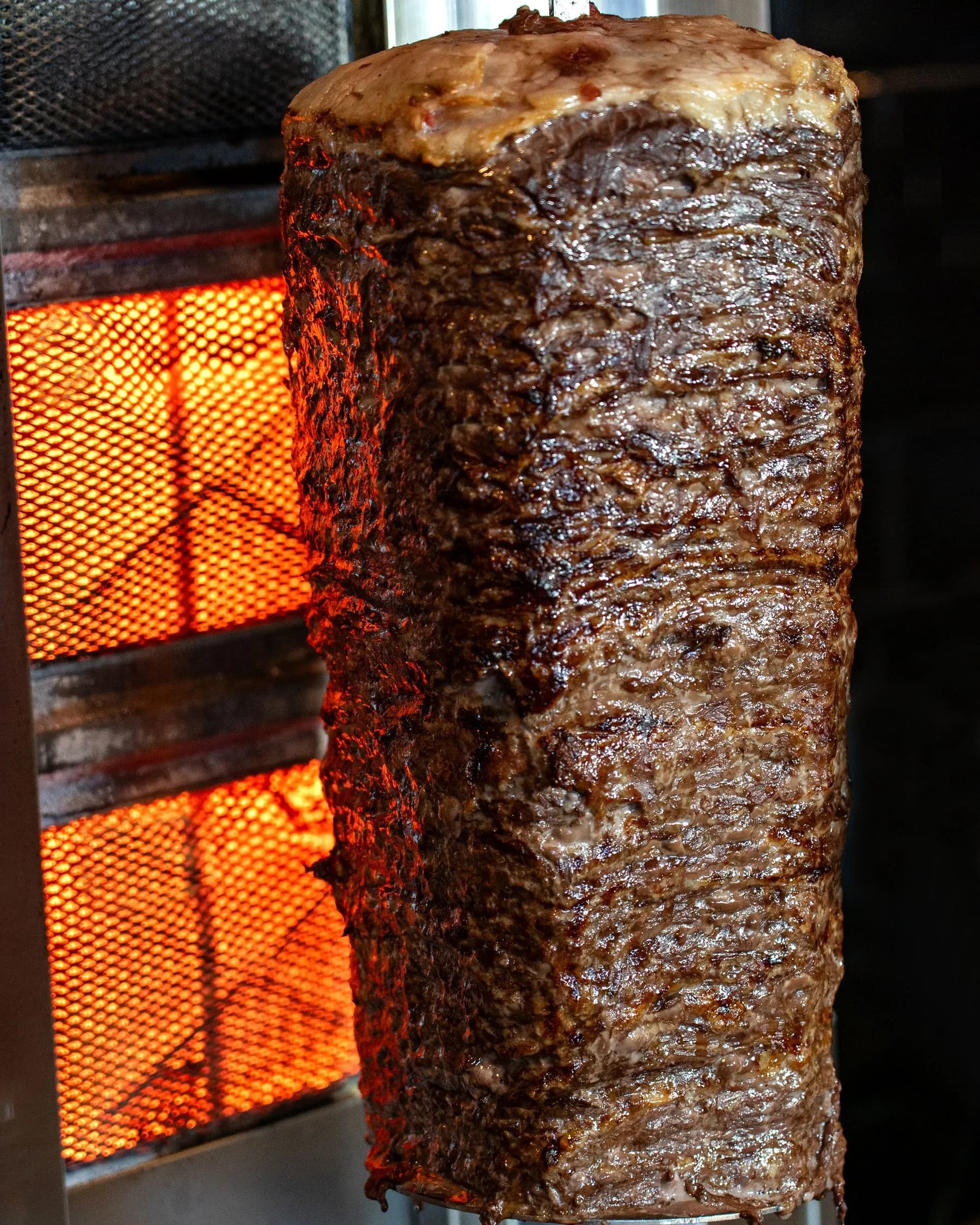
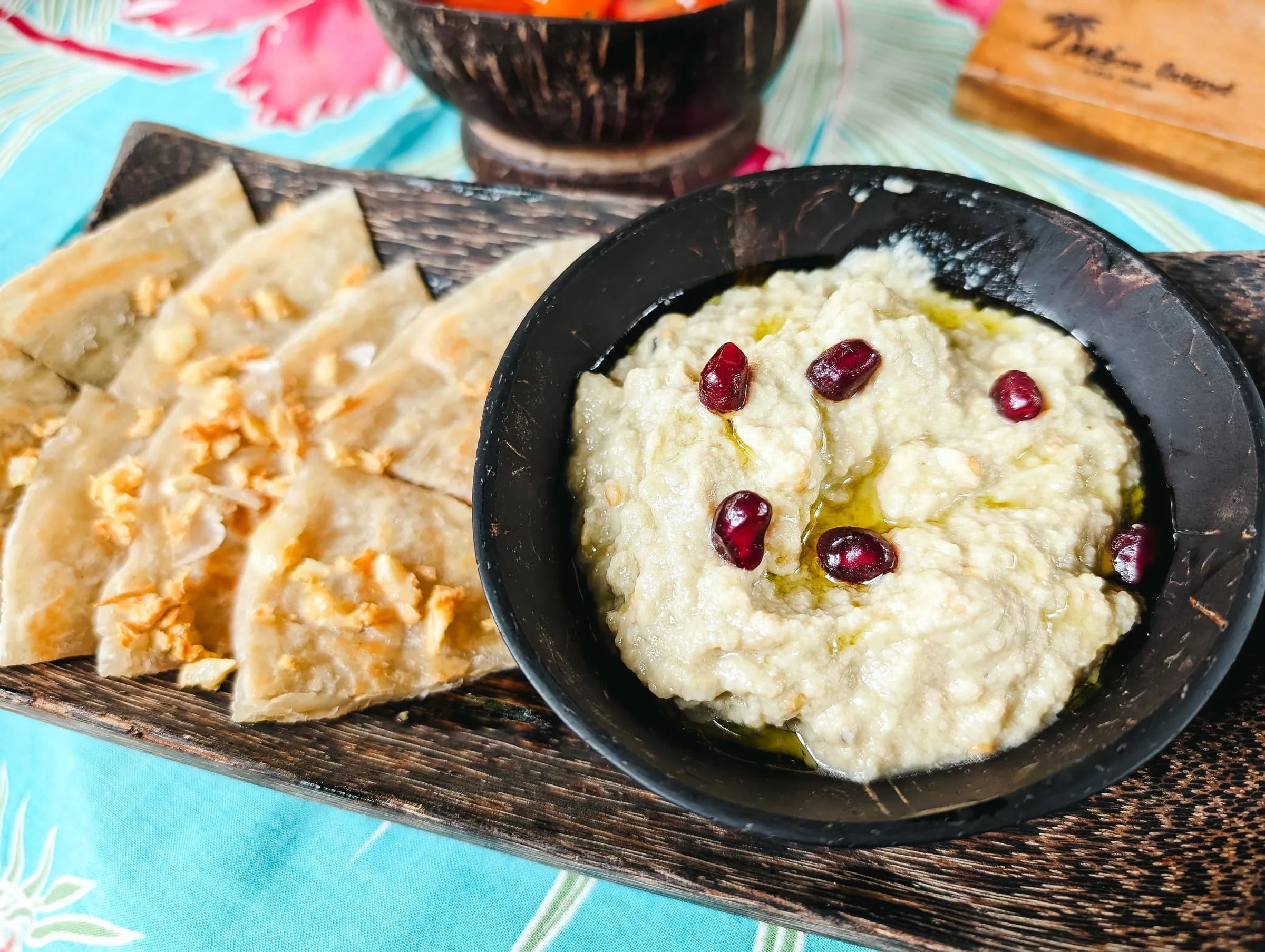
The baba ganoush starts with an aubergine set straight on the embers until the skin chars and the flesh turns creamy and smoky, which is why it tastes different from the oven version. The pita bread teaches the physics of the stone: heat from below turns the water in the dough to steam and the bread puffs up on its own, forming the pocket. The rotisserie chicken gyros cooks the meat in layers that brown as they turn and are sliced from the outside as they crisp. And the grilled watermelon with feta shows that a minute over live fire caramelises the surface of the fruit without warming the inside.
Order matters when you cook a full menu: aubergine on the open embers first, then the stone for the pitas, and the rotisserie last, because fitting and removing the stone with the kamado at 300 °C is awkward and risky without proper gloves. In summer, aubergines and watermelons from the market gardens of Murcia and Alicante are at their best. The aubergine has to be soft right to the centre; if it resists when pierced, it needs more time. What you need for the rotisserie and the stone is in essential accessories, and more ideas in what to cook beyond meat.