Cuisine
Asian cooking on the kamado
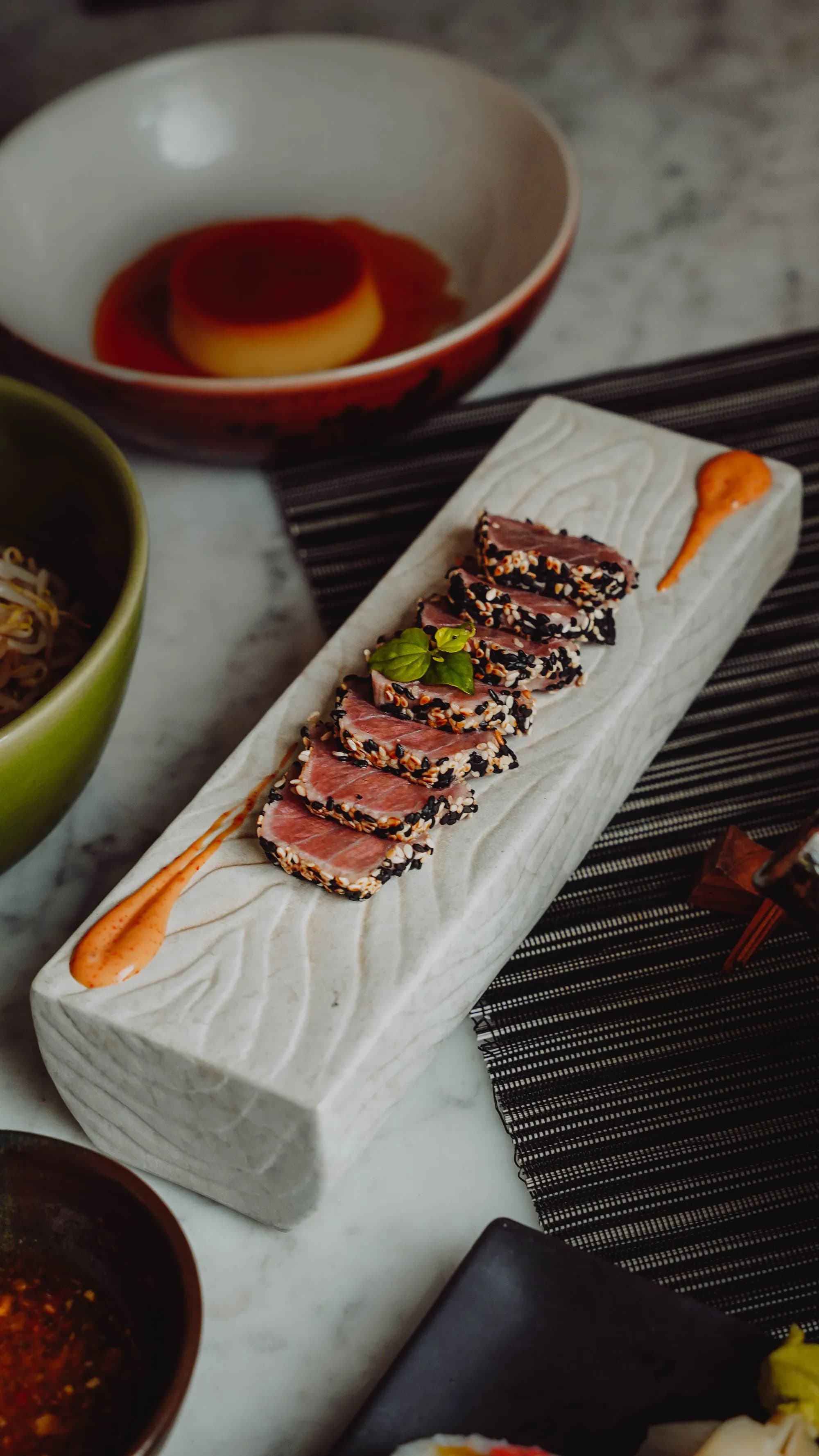
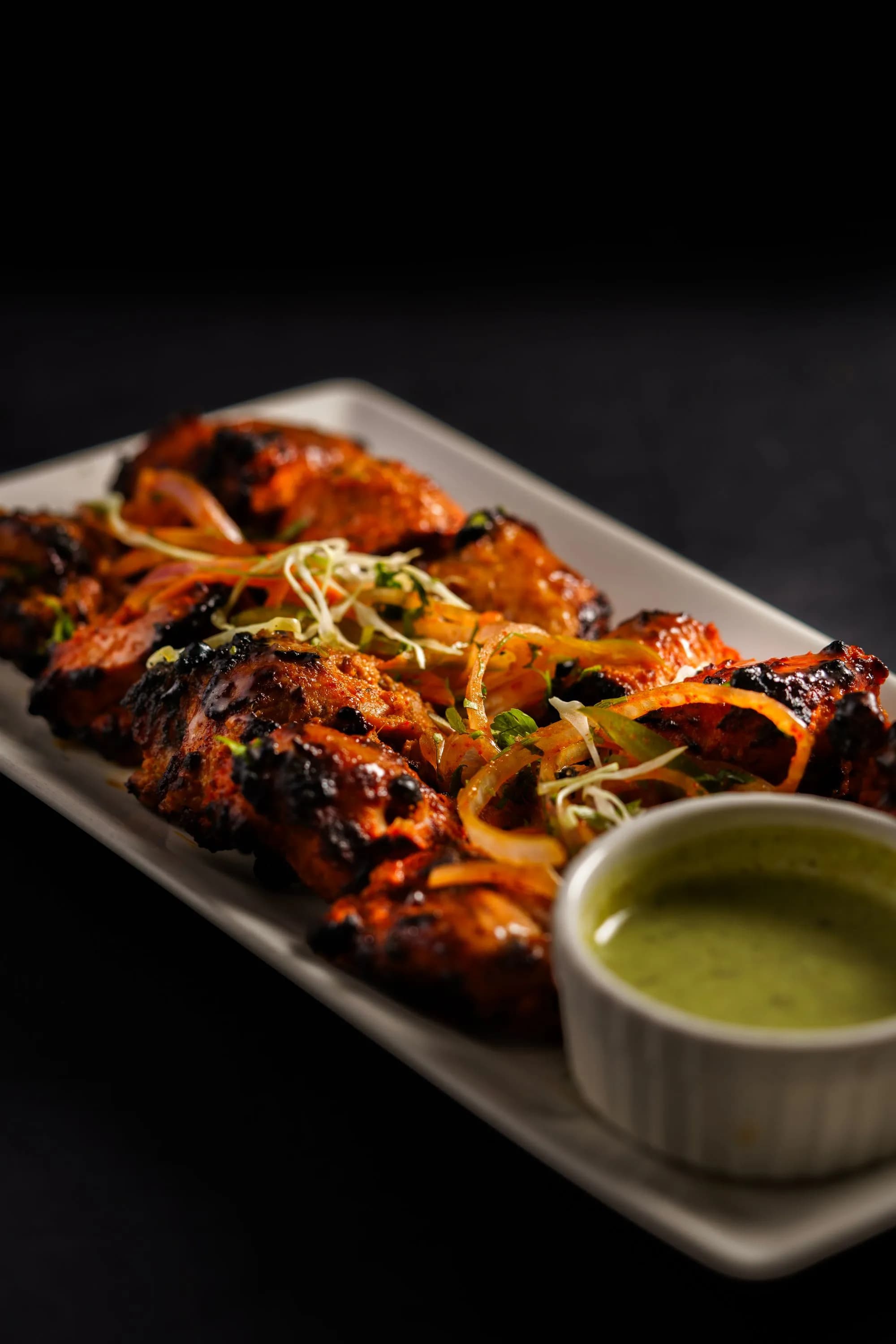
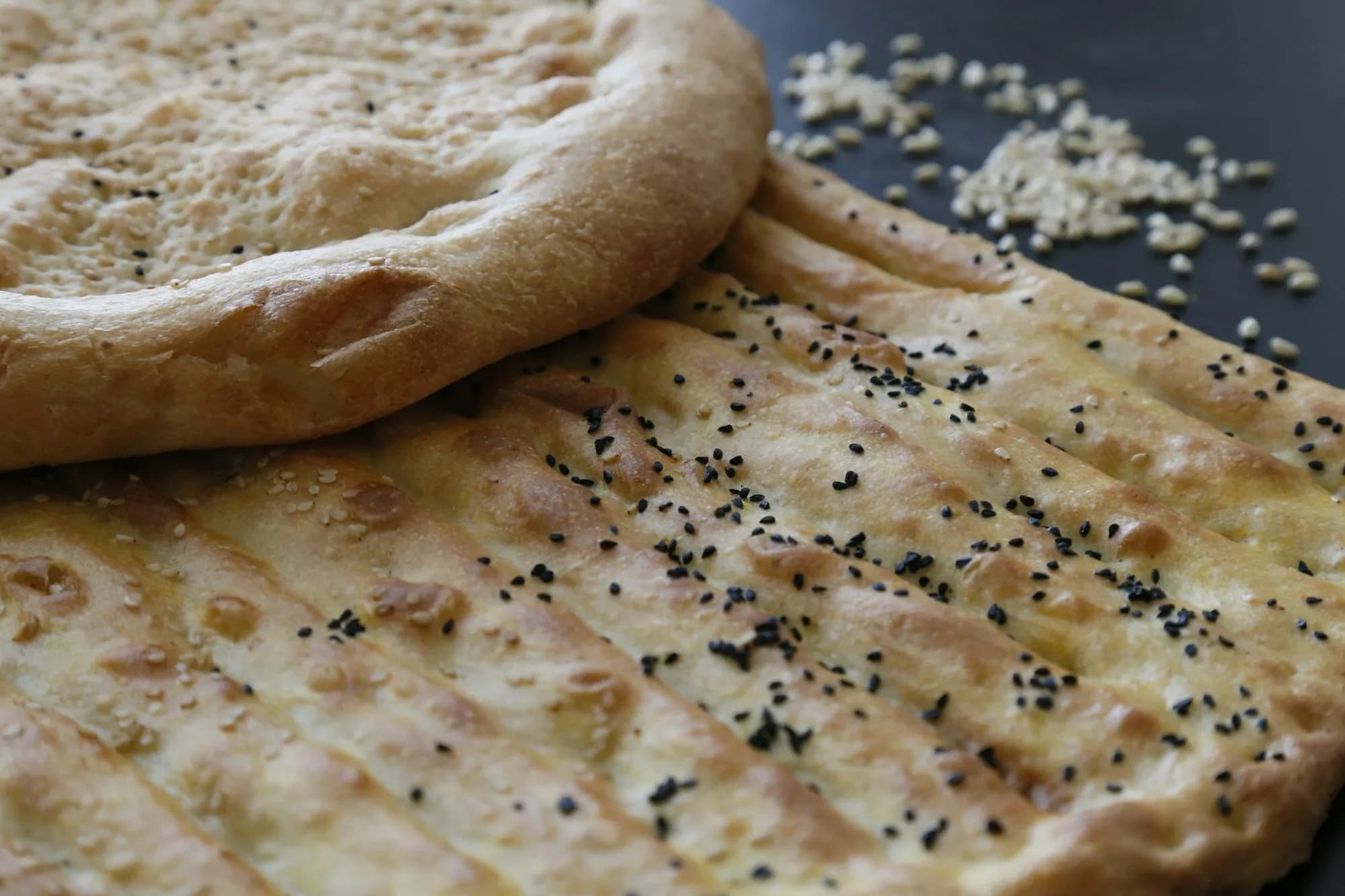
The kamado descends from the Japanese clay oven and shares its principle with the Indian tandoor: thick ceramic and enveloping heat. Here are tandoori chicken, naan and sesame-seared tuna.
3 recipes
The Asian part of this collection is small and built around very high heat. The Indian tandoor, made of clay with walls that store heat, is a close relative of the kamado. With a stone or cast iron and the vents wide open, the ceramic reaches 300-350 °C, enough for naan, tandoori chicken and a sear that takes seconds.
The tandoori chicken thighs teach what yoghurt does in a marinade: it tenderises the meat and helps the surface char over direct heat without drying out. Thighs carry more fat than breast, so they cope better with fierce heat and leave some margin if you overshoot by a minute. The garlic butter naan bakes on a very hot stone, where the dough puffs up in a couple of minutes, much as it would slapped against a tandoor wall. The bluefin tuna tataki is the opposite of a roast: a sesame crust outside, a raw centre and just a few seconds per side on a red-hot grate.
The typical mistake with these recipes is not giving the kamado time to soak up heat: at 300 °C the air climbs fast, but the stone and the walls take much longer, and they are what bakes the naan. For the tuna, buy a clean piece of loin, pat it dry and sear it straight from the fridge so the centre stays cold. If the tandoori marinade drips onto the coals and flares, close the lid for a few seconds: without oxygen the flame dies. High-heat setup is covered in temperature control and cooking with iron in cast iron and Dutch ovens.