Recipe · Indirect · Easy
Salt-baked sea bass on the kamado, juicy inside
A whole 1.2-1.5 kg sea bass under a coarse-salt crust, indirect heat at 200°C and around 35 minutes. The salt seals the moisture in and the fish comes out juicy, not salty, with a clean taste of the sea.
Quick answer
Salt-baked sea bass on the kamado bakes at 200 °C indirect with a deflector, encased in a coarse-salt crust bound with egg white (1 kg of salt per kilo of fish). A 1.2-1.5 kg fish takes 30-35 minutes; pull it at 55 °C internal. The salt seals in moisture and the fish comes out juicy, not salty.

One big step at a time, screen kept on and built-in timers.
- Prep
- 20 min
- Cook
- 35 min
- Servings
- 4 servings
- Temperature
- 200 °C
What time do you want to eat?
Pick a time and we'll tell you when to start.
12:25
Start the prep
12:45
Light the kamado
13:15
Onto the kamado
14:00
Serve
Estimate: it includes lighting and settling the kamado plus a margin for large cuts. If the recipe asks you to marinate or salt ahead, add that time.
Fire setupIndirect
- Dome
- 200 °C
- Deflector
- Yes
- Grate
- Standard height
- Fuel
- Charcoal
- Setup
- Deflector; grill-safe tray or stone for the salt crust
Temperature curve
1:10 h from lighting
Kamado domeInside the meat (probe)
| # | From | Phase | Dome | Internal |
|---|---|---|---|---|
| 1 | 0:00 | Light the charcoalAlways indirect, never direct with the crust | 20 → 200 °C | no probe |
| 2 | 0:20 | Stabilise10 min steady before the fish goes in | 200 °C | no probe |
| 3 | 0:30 | Put the food inSea bass in its salt crust on the tray | 200 → 175 °C | 8 °C |
| 4 | 0:31 | BakeDo not open; from min 25 probe: 55 °C by the bone | 175 → 200 °C | 8 → 55 °C |
| 5 | 1:05 | RestRises to 57-58 °C; crack the crust and lift it off in slabs | 200 → 150 °C | 55 → 57 °C |
| 6 | 1:10 | Serve | off | no probe |
0:00 is the moment you light the charcoal. Internal temperatures are the ones the recipe gives; without a probe, go by the times. Turn these times into clock times with the planner
For this recipe
Ingredients
- whole fresh sea bass, 1.2-1.5 kg, gutted but NOT scaled1
- coarse sea salt (about 1 kg of salt per kilo of fish)1.5 kg
- egg whites (to bind the crust)2
- cold water (a splash, to dampen the salt)100 ml
- lemon (half sliced for the belly, half to serve)1
- fresh rosemary2 sprigs
- fresh thyme (or dill)3 sprigs
- crushed garlic clove (optional, for the belly)1 clove
- extra-virgin olive oil (to finish)4 tbsp
- freshly ground black pepper (to finish)1 pinch
Another cut
Got a different cut? Here is how the recipe changes
For 4 people the recipe uses 1.4 kg of large whole fish: indirect at 200 °C, 40 min plus 10 min rest. If the shop had something else:
- Portion-size whole fish (sea bream, sea bass, trout)Buy 1.6 kg (4 pieces)
- Fire
- Indirect · 200 °C
- Time
- 20 min
- Rest
- 5 min
Light 25 min later
Same recipe, in portions. Indirect at 200 °C, one fish per person, pull at 60 °C by the bone. They can be salt-baked too, with a thinner crust.
- Salmon (fillet)Buy 1 kg
- Fire
- Indirect · 190 °C
- Time
- 25 min
- Rest
- 3 min
Light 20 min later
No bone, no crust. Indirect at 190 °C, fillet skin side down, pull at 50-57 °C in the centre. Salt crust is not worth it here: oil and coarse salt instead.
Times are a guide, based on the How much to buy figures; follow the recipe first. Full fire plan for 4 people: Portion-size whole fish (sea bream, sea bass, trout), Salmon (fillet).
Allergens
- Eggs
- Fish
Based on the recipe's ingredients. Always check the label of every product you buy.
The gear for this recipe
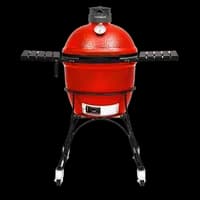 Kamado Joe Classic II 18"The 18" Classic takes a whole 1.2-1.5 kg sea bass indirect at 200 °C for 4.
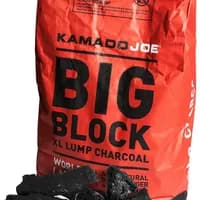 Kamado Joe Big Block XL lump charcoal 9.1 kgLump to lock in a clean 200 °C for the 35 minutes of baking.
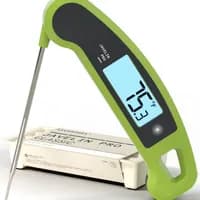 Lavatools Javelin PRO Duo instant-read thermometerProbe the centre to confirm the fillet reaches 55 °C under the salt.
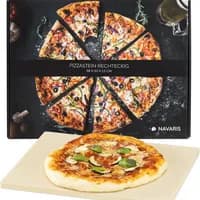 Navaris Cordierite Pizza Stone Rectangular XL (38×30×1.5 cm)
Method
- 01
Prep the sea bass
Ask for the bass gutted but not scaled — the scales are part of the barrier against the salt. Pat it dry on the outside. Stuff the belly with the slices from half a lemon, the rosemary, the thyme and the crushed garlic. Do not season the flesh: the crust does that job from the outside.
- 02
Set the deflector and stabilise 200°C
Light the charcoal, set the deflector for indirect cooking and stabilise the kamado at 200°C. It takes 15-20 minutes. Do not load the fish until the chamber temperature holds steady for 10 minutes. Always indirect: over direct heat the crust scorches underneath before the fish is done.
- 03
Make the salt mix
Mix the coarse salt with the 2 egg whites and a splash of cold water to a packed-snow texture that holds its shape when squeezed. The egg white is the binder: it sets the crust rigid so it does not crumble. Reckon on 1 kg of salt per kilo of fish, plus a little extra to seal properly.
- 04
Build the bed and cover
On a kamado-safe tray or a stone, spread a 1 cm bed of salt in the shape of the fish. Lay the bass on it and cover it completely with the rest of the salt, pressing to seal — leave only the head and tail showing if you like. Close any gaps: that is where the steam escapes.
- 05
Bake over indirect heat
Slide the tray into the kamado and close the lid. Bake at 200°C indirect. For a 1.2-1.5 kg fish reckon 30-35 minutes: the rule of thumb is roughly 22-25 minutes per kilo. Do not open the lid to peek — every opening drops the chamber and stretches the curve. The crust will gradually colour and harden.
- 06
Check doneness with a probe
From the 25-minute mark, push an instant-read probe through the crust into the loin next to the spine (the thickest part). You want 55°C internal. If it is not there yet, close up and check again in 3-4 minutes. The moment it reads 55°C, pull the tray: carry-over does the rest.
- 07
Rest and crack the crust
Let it rest 5 minutes: the temperature climbs to 57-58°C and the juices settle. Tap the crust with the handle of a knife or a pestle until it cracks and lift it off in plates. Peel away the skin with the scales attached — it comes off clean, taking the salt with it. Lift the fillets off the backbone with a flexible spatula.
- 08
Plate up
Set the clean fillets on warm plates. A generous drizzle of extra-virgin olive oil, freshly ground pepper and a lemon wedge alongside. Taste before adding any salt: you almost never need it. Serve with kamado potatoes or a seasonal tomato salad.
About this recipe
Salt-baked sea bass is one of the most rewarding things to pull off a kamado: it looks like a restaurant dish, yet it is technically hard to get wrong if you nail two things — the crust and the internal doneness. Coarse salt, bound with egg white and a splash of water, forms a dome that bakes the fish in its own steam at 200°C indirect. The flesh comes out firm and pearly, juicy, with a far cleaner taste of the sea than any pan-fried bass.
Why the salt does not make the fish salty
It is everyone's first question. The key is that the skin and scales act as a barrier: the bass bakes whole, unscaled and opened no further than gutting it. The salt sets into a rigid shell that insulates and spreads the heat evenly — it works like a miniature clay oven. Salt only transfers at the points where the skin is broken, which is why you do not stuff the belly with carelessly cut lemon or slash the flesh. The result is perfect seasoning from the inside out, with barely any salt needed at the table.
The kamado at 200°C indirect: why it beats the oven
With the deflector in, the kamado behaves like a thick-walled convection oven: the ceramic radiates an enveloping, stable heat that sets the crust fast and holds 200°C without swings. Against a home oven, you gain two things: a far steadier temperature (the ceramic does not drop degrees when a cold piece goes in) and, if you want it, a subtle edge of fire. We are not after smoke here — sea bass is delicate and strong smoke buries it — but good lump charcoal alone leaves a background note an electric oven cannot give.
The doneness: 55-58°C internal, not one degree more
This is the difference between a memorable bass and a dry one. White fish is at its best between 55 and 58°C at the loin, next to the spine. Push past that and the flesh dries out and turns cottony, with no way back. Since you cannot see the fish under the crust, an instant-read probe is your only eye: push it through the salt into the thickest part from the 25-minute mark. When it reads 55°C, pull it. Carry-over will lift it another 2-3°C during the 5-minute rest before you crack the crust.
In 30 seconds
Whole sea bass 1.2-1.5 kg left unscaled, just gutted, herbs and lemon inside. Crust: 1 kg of coarse salt per kilo of fish bound with 2 egg whites and a splash of water. Kamado 200°C indirect with the deflector. Bake 30-35 min to 55-58°C internal (probe through the crust). Rest 5 min, crack the crust with one sharp blow, lift away salt and skin, free the fillets. Clean taste of the sea, juicy, not salty.
Will it fit your kamado?
Small
33-40 cm · Joe Jr, MiniMax
Won't fit
A 1.2-1.5 kg bass (~45 cm) probably won't fit; use a ~600 g fish or two small ones.
Medium
46-51 cm · Classic, Large
Tight
Probably tight, set diagonally; a 38x30 cm stone (~48 cm diagonal) may not fit a 46 cm grate: use a tray.
Large
56-61 cm · Big Joe, XL
Fits
The whole fish fits comfortably, and the rectangular stone easily.
What to serve with it
Sides
- Ember-roasted potatoes
- Roasted seasonal vegetables
- Seasonal tomato salad
- Wine
- Albariño from Rías Baixas or Godello from Valdeorras
- Beer
- Light, dry pilsner-style lager
- Alcohol-free
- Sparkling water with lemon and rosemary
Leftovers and storage
- In the fridge
- Skinless fillets, salt removed, airtight in the fridge within 2 hours: 1-2 days.
- Freezing
- Does not freeze well: the flesh dries out and falls apart. Eat within 1-2 days instead.
- Reheating
- Low covered oven with a drizzle of oil, just until hot in the centre; or cold with oil and lemon.
- Using them up
- Sea bass croquettes or fritters, or a salad with boiled potato and roasted pepper.
Cool and refrigerate within 2 hours. When in doubt, throw it out.
Leftover embers
You still have embers: what to do with the leftover heat
For 35 min at 200 °C in a classic kamado you load about 800 g of charcoal and burn 400 g: when you serve, about 380 g of live embers remain. Before you shut the vents, that is still enough for:
Without touching the vents
200 °Cdessert while you eat
1 h 20 minof embers
- Cherry clafoutis in a cast-iron skillet on the kamado35 min · 180 °C
- Chestnuts and Sweet Potato Roasted in the Kamado Embers45 min · 180 °C
- Reina Pepiada Arepas on a Budare in the Kamado, Crisp Outside1 h · 200 °C
No recipe needed
- Yesterday's bread with oil and garlic, on the grate (10 min)
- Corn cobs in their husks (30 min)
- Whole apples with a slit in the skin (45 min)
Closing the vents almost fully and waiting for it to drop
100-130 °Ca short smoke
2 h 25 minof embers
- Hot-Smoked Whole Mackerel on the Kamado45 min · 120 °C
No recipe needed
- Coarse salt on a tray, with a wood chunk: smoked salt for months (1-2 h)
- Almonds or walnuts on a rack (45 min)
- Whole heads of garlic, for spreading (1 h)
Opening the vents almost fully
210-270 °Cgrilled vegetables
30 minof embers
- Grilled Watermelon with Feta, Mint and Balsamic Reduction10 min · 250 °C
- Grilled provolone on the kamado with tomato, oregano and olive oil, in a cast-iron skillet12 min · 230 °C
- Garlic Butter Naan on the Kamado18 min · 260 °C
No recipe needed
- Strips of courgette and aubergine, char-marked (5 min)
- Pita or naan from shop dough, on the grate (3 min each)
- Halved tomatoes, cut side down, for a sauce (10 min)
Before opening the lid, crack it open for a few seconds first; if you raise the heat, stir the ash so the coals can breathe. And if you are not going to use them: once the food is out, close the bottom and top vents. The charcoal that does not burn (about 380 g) can be used next time. Different size of kamado? Work out your load for 1 h 30 min of fire, lighting included.
No kamado?
How to make it without a kamado: oven, gas grill or pellets
Salt-baked sea bass needs 200 °C indirect heat for 30-35 minutes. The crust insulates the fish, so a home oven gives almost the same result.
Home oven
- Temp.
- 200 °C conventional (185-190 °C fan)
- Time
- 30-35 min, same as on the kamado
- A regular baking tray on the middle shelf; no stone needed
- Top and bottom heat: the oven is already indirect, so no deflector
- Probe to 55 °C at the thickest part, as in the recipe
SmokeBarkJuicinessSame result: the salt crust does all the work
Gas grill
- Temp.
- 200 °C, two-zone setup, lid closed
- Time
- 30-40 min; allow a few more if it is windy
- Light one side and set the tray on the unlit side; direct heat scorches the salt underneath
- Turn the tray 180° halfway, as the lit side runs hotter
- Trust the probe, not the lid thermometer
SmokeBarkJuicinessVery close; just keep the base from scorching
Pellet grill or electric smoker
- Temp.
- 200 °C on a pellet grill
- Time
- 30-35 min, same as on the kamado
- Pellet grill only: an electric smoker cannot reach 200 °C
- Tray straight on the grate; the crust blocks smoke, so the pellet choice hardly matters
- Probe to 55 °C through the salt, as in the recipe
SmokeBarkJuicinessSame as on the kamado; an electric smoker will not do
Temperatures and times are a guide; the original recipe is the kamado one. Tempted? which kamado to choose for what you cook
Editor's tips
- An instant-read probe is not optional here: it is literally your only eye under the crust. Without it you are blind, and the bass goes from juicy to cottony in five minutes. A Lavatools Javelin or similar reads in 2-3 seconds through the salt.
- Do not scale the fish and do not slash the flesh. The scales and intact skin are the barrier that stops the salt seasoning the inside. If your fishmonger scales it out of habit, ask them specifically NOT to for a salt-baked preparation.
- Skip the heavy smoke. Sea bass is delicate and a chunk of hickory or mesquite buries it completely. If you want a hint, a single small piece of apple or vine cutting is plenty — but the classic version, on good charcoal alone, is already spot on.
Gear for this recipe
As an Amazon Associate, mikamado.es earns from qualifying purchases. At no extra cost to you.

Kamado Joe Classic II 18"
The 18" Classic takes a whole 1.2-1.5 kg sea bass indirect at 200 °C for 4.
€1,699

Kamado Joe Big Block XL lump charcoal 9.1 kg
Lump to lock in a clean 200 °C for the 35 minutes of baking.
€67

Lavatools Javelin PRO Duo instant-read thermometer
Probe the centre to confirm the fillet reaches 55 °C under the salt.
€65

Navaris Cordierite Pizza Stone Rectangular XL (38×30×1.5 cm)
€24
Have you made it?
Tell us how it turned out on your kamado. We review every rating before publishing it.
No published ratings yet. Be the first!
FAQ
How much salt do I need per kilo of fish, and what kind of salt?
The benchmark ratio is 1 kg of salt per kilo of fish, plus a little extra to seal the gaps — for a 1.2-1.5 kg bass, reckon on 1.5 kg of salt. Use coarse sea salt, never fine table salt: coarse sets into a rigid shell that insulates and lifts off clean, while fine salt melts, sticks to the skin and does season the fish. Binding the salt with 1-2 egg whites and a splash of water makes the crust harden and stops it crumbling when you handle it.
How do I know when the salt-baked bass is done without breaking the crust?
With an instant-read probe pushed through the crust into the loin next to the spine (the thickest part). White fish is juicy between 55 and 58°C internal; pull at 55°C because carry-over adds another 2-3°C during the rest. Without a probe, the visual cue is the crust: when it is fully set, golden and starting to crack on top by itself, the fish is usually near the mark — but by then you are guessing, which is exactly why the probe is the only reliable method.
Do I need a deflector, or can I cook it direct?
You need a deflector. Salt-baking is oven work, not grilling: over direct heat the underside of the crust scorches and cracks before the centre of the fish reaches temperature, and salt touching the coals turns bitter. The deflector (ceramic plate or conveggtor) turns the kamado into a 200°C convection oven that sets the crust evenly. There is no direct version that works well for this dish — indirect cooking is non-negotiable here.
What fish work besides sea bass?
Any whole, firm-fleshed fish with intact skin works in salt. Sea bream is the most direct and cheaper alternative, with an identical internal target (55-58°C). Red sea bream (besugo) is superb and a touch fattier, so it forgives an extra couple of minutes better. Snapper, white sea bream and meagre also come out very well. Avoid very flat or very thin fish — they cook too fast and the crust offers no margin — and big oily fish like tuna, which need a different technique. Adjust time to weight: roughly 22-25 minutes per kilo at 200°C.
How do I open and plate the salt crust without the fish ending up salty?
After the rest, give the centre of the crust a sharp tap with the handle of a knife or a pestle to crack it, and lift it off in large plates, careful not to let salt fall onto the flesh. The skin is the key: peel it away whole with the scales attached — it comes off clean and drags any remaining salt with it. Only then lift the fillets off the backbone with a flexible spatula and move them to a clean plate. If you clear the salt without removing the skin first, you can drag grains onto the meat.
Can you make salt-baked sea bass without a kamado?
Yes, and it comes out almost the same: 200 °C for 30-35 minutes in a home oven, on a two-zone gas grill or on a pellet grill. The salt crust insulates the fish, so all that matters is pulling it at 55 °C inside.
Can I make this recipe with a different cut instead of large whole fish?
Portion-size fish keep the indirect 200 °C roast and can go in a salt crust too; salmon drops to 190 °C and comes off earlier, without a crust. In both cases the probe in the thickest part decides, not the clock.
What do I do with the embers left after making Salt-baked sea bass on the kamado, juicy inside?
After 35 min at 200 °C in a classic kamado about 380 g of live embers remain: 1 h 20 min more at 200 °C without touching the vents, 2 h 25 min at 100-130 °C closing the vents or 30 min at 210-270 °C opening the vents. If you are not going to use them, close both vents and keep the charcoal for next time.
More kamado recipes


KEEP READING
Go deeper on this dish
- Recommended kamado
Kamado Joe Classic II 18"
The 18" Classic takes a whole 1.2-1.5 kg sea bass indirect at 200 °C for 4.
- Editorial guide
How to light a kamado: the step-by-step method
No petrol, no weird tablets and no 45-minute waits. The cone method, airflow control and the mistakes that prevent 80% of the frustration.
- Glossary term
Heat deflector
Ceramic plate placed between the coals and the grate to turn direct fire into indirect cooking.
- Related comparison
kamado joe classic ii vs kamado joe classic iii
The most-asked question on r/kamadojoe: do I pay the Classic III premium for the SlōRoller, or stick with the Classic I…