Recipe · Smoked · Medium
Levante-style smoked leg of lamb
A boneless leg of lamb, marinated in rosemary, lemon and Costa Blanca olive oil, smoked over local almond wood. The kamado paying tribute to the Alicante countryside.
Quick answer
Levante-style leg of lamb marinates for 3 hours in rosemary, lemon, garlic and Costa Blanca olive oil, then smokes over almond wood at 130 °C indirect to 65 °C internal, about 4 hours. Rest it for 15 minutes until it reaches 67-68 °C and slice it thin against the grain: pink, juicy and floral.

One big step at a time, screen kept on and built-in timers.
- Prep
- 180 min
- Cook
- 240 min
- Servings
- 6 servings
- Temperature
- 130 °C
What time do you want to eat?
Pick a time and we'll tell you when to start.
05:15
Start the prep
08:15
Light the kamado
09:00
Onto the kamado
13:00
Take it off and rest
14:00
Serve
Estimate: it includes lighting and settling the kamado plus a margin for large cuts. If the recipe asks you to marinate or salt ahead, add that time.
Fire setupIndirect
- Dome
- 130 °C
- Deflector
- Yes
- Grate
- Standard height
- Fuel
- Charcoal lit in one spot (Minion method)
- Wood
- 3 almond wood chunks
- Setup
- Deflector and probe thermometer
Temperature curve
5:00 h from lighting
Kamado domeInside the meat (probe)
| # | From | Phase | Dome | Internal |
|---|---|---|---|---|
| 1 | 0:00 | Light the charcoalMinion method, thin blue smoke before the almond chunks | 20 → 130 °C | no probe |
| 2 | 0:45 | Put the food inDry leg, fat side up, probe in the centre | 130 → 115 °C | 18 °C |
| 3 | 0:55 | SmokeDo not open until 50 °C internal | 115 → 130 °C | 18 → 65 °C |
| 4 | 4:15 | Take outLoose foil rest, climbs to 67-68 °C | 130 → 220 °C | 65 → 68 °C |
| 5 | 4:30 | BakePotatoes in a tray with rosemary | 220 °C | no probe |
| 6 | 5:00 | Serve | off | no probe |
0:00 is the moment you light the charcoal. Internal temperatures are the ones the recipe gives; without a probe, go by the times. Turn these times into clock times with the planner
For this recipe
Ingredients
- boneless tied leg of lamb2.2 kg
- extra-virgin olive oil DOP (Costa Blanca)6 tbsp
- fresh rosemary4 sprigs
- garlic cloves, crushed5 cloves
- lemon (zest and juice)1
- flaky salt1 tbsp
- ground black pepper1 tsp
- local almond wood chunks3 pieces
- small potatoes (for the side)800 g
- traditional allioli to serve1 bowl
Another cut
Got a different cut? Here is how the recipe changes
For 6 people the recipe uses 2.5 kg of leg of lamb: indirect at 160 °C, 2 h 5 min plus 20 min rest. If the shop had something else:
- Lamb shoulder (bone-in)Buy 2.6 kg (2 pieces)
- Fire
- Indirect · 160 °C
- Time
- 1 h 5 min
- Rest
- 20 min
Light 1 h 20 min later
Same recipe, smaller piece. Indirect at 160 °C just like the leg; pull at 57 °C in the thickest part and it climbs to 63 °C while resting. More marbled.
- Pork loin (roast)Buy 1.75 kg
- Fire
- Indirect · 180 °C
- Time
- 1 h 36 min
- Rest
- 15 min
Light 55 min later
Pork, and boneless: raise the dome to 180 °C, indirect, and pull at 63 °C in the centre. It is far leaner, so don't overshoot, and slice it thin.
- Pork collar (neck)Buy 1.75 kg
- Fire
- Indirect · 160 °C
- Time
- 2 h 55 min
- Rest
- 15 min
Light 45 min earlier
With pork collar the doneness changes, not the fire: same indirect 160 °C, but take the centre to 85 °C so it turns tender. It comes out sliced, never pink.
Times are a guide, based on the How much to buy figures; follow the recipe first. Full fire plan for 6 people: Lamb shoulder (bone-in), Pork loin (roast), Pork collar (neck).
Allergens
None of the 14 mandatory-declaration allergens in the ingredients.
Traditional allioli is just garlic and oil; store-bought or homemade with egg contains egg.
Based on the recipe's ingredients. Always check the label of every product you buy.
The gear for this recipe
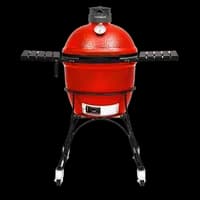 Kamado Joe Classic II 18"The 18" is plenty for a boned leg for 6 cooked indirect.
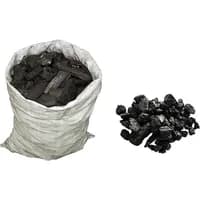 Orework Spanish Holm Oak Charcoal 15 kgSpanish holm oak charcoal for steady embers through a long smoke.
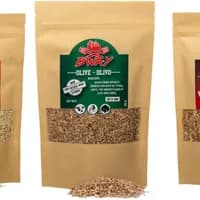 BWAY Legna Tris: olive, orange and almond smoking chips (3×400 ml)
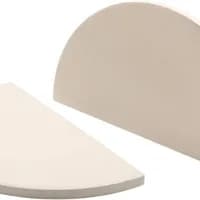 BBQ Future Half-Moon Ceramic Heat Deflectors (Kamado Joe Classic I/II/III, 2-pack)Classic half-moon deflectors to smoke at 130 °C with no direct heat.
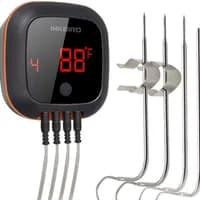 Inkbird IBT-4XS Bluetooth thermometerBluetooth probe to bring the leg to pink while keeping an eye on the 130 °C.
Method
- 01
Step 1 · Marinate for 3 hours
Chop the rosemary, crush the garlic and combine with olive oil, lemon zest and juice, salt and pepper. Brush the leg on every side and rest for 3 hours at room temperature in a tray. Turn every hour.
- 02
Step 2 · Stabilise at 130 °C
Light only one zone of charcoal (Minion method) and set the deflector. Stabilise the kamado at 130 °C indirect for 25 minutes. Once the smoke runs clear blue, add the almond wood chunks.
- 03
Step 3 · Load the leg
Drain the leg from the marinade and pat very dry. Sit it on the grate fat-side up. Push the probe into the geometric centre of the cut and close the lid.
- 04
Step 4 · Smoke 3-4 hours
Hold a steady 130 °C. Do not open the lid until the probe reads 50 °C — every peek costs 15 minutes of cook. Watch the smoke: if it turns white and thick, crack the bottom vent a touch.
- 05
Step 5 · Pull at 65 °C
Pull the leg when the probe reads 65 °C internal. Move to a board, tent loosely with foil and rest for 15 minutes. The temperature climbs to 67-68 °C — perfect medium.
- 06
Step 6 · Potatoes in the same kamado
While the leg rests, push the kamado to 220 °C by opening the bottom vent. Toss the quartered potatoes with oil, salt and rosemary and load them in a tray for 30 minutes. They pick up the residual almond aroma.
- 07
Step 7 · Carve thin
Cut the string off the leg. Slice 3-4 mm thin against the grain with a sharp chef knife. Serve immediately with allioli and the smoked potatoes.
About this recipe
A Levante-style smoked leg of lamb is a 2-2.5 kg boneless leg marinated 3 hours in rosemary, lemon, garlic and Costa Blanca olive oil, smoked over local almond wood at 130 °C indirect to 65 °C internal. The trick: almond instead of the usual American woods — more floral, less sweet, far better suited to Mediterranean lamb.
Why almond, not oak
American smoked lamb recipes call for pecan, oak or hickory. Not here — too aggressive for grass-fed Mediterranean lamb. Almond wood (prunings from inland Alicante almond groves, free or nearly so if you know someone with land) gives a floral smoke, almost toasted-nut, that sits beautifully alongside rosemary and olive oil. If you cannot source almond, olive prunings work equally well — the regional twist is to deliberately skip the American woods.
The marinade and the cut
Ask your butcher for a boneless, tied leg — faster to cook, easier to carve, holds shape. The marinade is minimalist: DOP Comunitat Valenciana extra-virgin olive oil, chopped fresh rosemary, crushed garlic, zest and juice of one lemon, salt, pepper. Three hours at room temperature — more does not help, and the salt starts drying the meat. Drain and pat dry before the kamado.
Cook and rest
Kamado at 130 °C indirect with deflector, three almond chunks spaced out. Load the leg fat-side up, probe in the geometric centre. Pull at 65 °C internal — a 15-minute rest carries it to 67-68 °C, the perfect medium: pink inside, juicy, no blood. Total time around 4 hours. While it rests, crank the kamado to 220 °C, throw in quartered potatoes with rosemary and oil, and 30 minutes later you have effortlessly smoked sides.
How to serve
Slice thin against the grain. Serve with traditional allioli (garlic, salt, oil, one yolk), the kamado-smoked potatoes and a pink tomato salad with spring onion and raw olive oil. Wine: a young Alicante red (Monastrell), or for a curveball a natural Asturian cider — the acidity cuts the lamb fat perfectly.
In 30 seconds
Boneless leg 2-2.5 kg, 3h marinade with rosemary, lemon, garlic and DOP oil, kamado 130 °C indirect with local almond, probe to 65 °C, rest 15 min and slice thin. Lamb from the Alicante countryside, not from Texas.
Will it fit your kamado?
Small
33-40 cm · Joe Jr, MiniMax
Fits
The tied 2.2 kg leg fits; the potatoes go afterwards on a small tray.
Medium
46-51 cm · Classic, Large
Fits
The leg fits easily, followed by the tray of potatoes.
Large
56-61 cm · Big Joe, XL
Fits
Fits with room to spare; probably two legs for more servings.
What to serve with it
Sides
- Rosemary potatoes roasted in the same kamado
- Escalivada of peppers and aubergine
- Wine
- Monastrell red from Alicante or Jumilla
- Beer
- Toasty ale or bock
- Alcohol-free
- Rosemary lemonade
Leftovers and storage
- In the fridge
- Whole or sliced, airtight within 2 h: 3-4 days in the fridge.
- Freezing
- Freezes 2-3 months; the allioli doesn't, it splits. Thaw in the fridge, never refreeze.
- Reheating
- Slices in a covered pan with a little stock to 74 °C; or cold, thinly sliced.
- Using them up
- Pita with lamb, yoghurt and salad.
Cool and refrigerate within 2 hours. When in doubt, throw it out.
Leftover embers
You still have embers: what to do with the leftover heat
For 4 h at 130 °C in a classic kamado you load about 1 kg of charcoal and burn 700 g: when you serve, about 300 g of live embers remain. Before you shut the vents, that is still enough for:
Without touching the vents
130 °Ca short smoke
2 h 5 minof embers
- Hot-Smoked Whole Mackerel on the Kamado45 min · 120 °C
No recipe needed
- Coarse salt on a tray, with a wood chunk: smoked salt for months (1-2 h)
- Almonds or walnuts on a rack (45 min)
- Whole heads of garlic, for spreading (1 h)
Opening the vents halfway
140-200 °Cdessert while you eat
50 minof embers
- Smoked skillet brownie on the kamado, fudgy centre35 min · 175 °C
- Chestnuts and Sweet Potato Roasted in the Kamado Embers45 min · 180 °C
- Brioche Burger Buns on the Kamado18 min · 190 °C
No recipe needed
- Yesterday's bread with oil and garlic, on the grate (10 min)
- Corn cobs in their husks (30 min)
- Whole apples with a slit in the skin (45 min)
Before opening the lid, crack it open for a few seconds first; if you raise the heat, stir the ash so the coals can breathe. And if you are not going to use them: once the food is out, close the bottom and top vents. The charcoal that does not burn (about 300 g) can be used next time. Different size of kamado? Work out your load for 5 h of fire, lighting included.
Editor's tips
- If you live in the Comunidad Valenciana or Murcia, ask for almond prunings at a local nursery — usually free or very cheap. Dry it 6 months in the sun before using.
- Do not marinate longer than 4 hours — the lemon acidity starts cold-cooking the meat and leaves a mealy surface texture.
- Kamado lamb is best hot but not blistering. If it rests longer than 20 minutes, slice and warm briefly in its own juices before serving.
- For a more festive version, swap one rosemary sprig for fresh mint leaves in the marinade. Works especially well if you serve with lamb couscous.
Gear for this recipe
As an Amazon Associate, mikamado.es earns from qualifying purchases. At no extra cost to you.

Kamado Joe Classic II 18"
The 18" is plenty for a boned leg for 6 cooked indirect.
€1,699

Orework Spanish Holm Oak Charcoal 15 kg
Spanish holm oak charcoal for steady embers through a long smoke.
€45
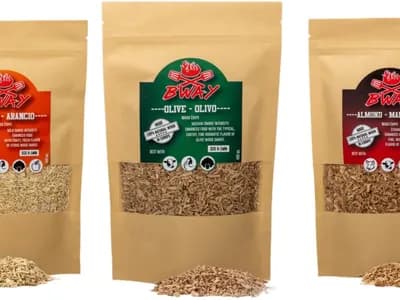
BWAY Legna Tris: olive, orange and almond smoking chips (3×400 ml)
€12

BBQ Future Half-Moon Ceramic Heat Deflectors (Kamado Joe Classic I/II/III, 2-pack)
Classic half-moon deflectors to smoke at 130 °C with no direct heat.
€173
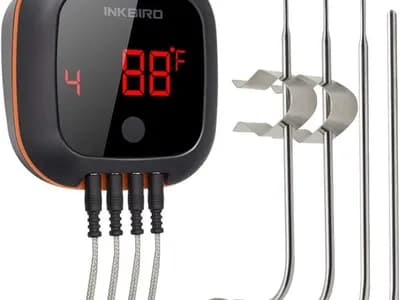
Inkbird IBT-4XS Bluetooth thermometer
Bluetooth probe to bring the leg to pink while keeping an eye on the 130 °C.
€47
Have you made it?
Tell us how it turned out on your kamado. We review every rating before publishing it.
No published ratings yet. Be the first!
FAQ
Better boneless or bone-in?
For the kamado, boneless and tied wins on ease: more uniform cook, shorter time (4 hours vs 5-6 with bone) and far easier carving. Bone-in adds flavour around the femur fat but needs more probe care. First time smoking lamb? Go boneless.
What is the minimum marinating time that works?
One hour minimum if you are in a rush, but 3 hours is the sweet spot. Less than an hour and the rosemary, garlic and lemon stay on the surface. More than 4 hours and the lemon acidity starts breaking down the fibre. To prep ahead, marinate without lemon and add the juice just before the kamado.
What wood do I use if I cannot find almond?
In order of preference: olive prunings (same Mediterranean vibe, widely available in rural areas), cherry (sweeter, works but loses the floral edge of almond), or a 50/50 blend of apple and pecan if you only have store-bought woods. Skip oak and hickory — too aggressive for Mediterranean lamb.
Can I make this recipe with a different cut instead of leg of lamb?
Lamb shoulder keeps the recipe as it is, same heat and same pink finish. Pork loin needs a hotter dome and pork collar is cooked much further so it turns tender. In every case the probe decides, not the clock.
What do I do with the embers left after making Levante-style smoked leg of lamb?
After 4 h at 130 °C in a classic kamado about 300 g of live embers remain: 2 h 5 min more at 130 °C without touching the vents or 50 min at 140-200 °C opening the vents. If you are not going to use them, close both vents and keep the charcoal for next time.
More kamado recipes
KEEP READING
Go deeper on this dish
- Recommended kamado
Kamado Joe Classic II 18"
The 18" is plenty for a boned leg for 6 cooked indirect.
- Editorial guide
How to light a kamado: the step-by-step method
No petrol, no weird tablets and no 45-minute waits. The cone method, airflow control and the mistakes that prevent 80% of the frustration.
- Glossary term
Low & slow
Cooking at low temperature (95-130 °C) for many hours to tenderise tough cuts and develop deep smoke.
- Related comparison
kamado joe classic ii vs kamado joe classic iii
The most-asked question on r/kamadojoe: do I pay the Classic III premium for the SlōRoller, or stick with the Classic I…