Recipe · Reverse-sear · Medium
St. Louis-style ribs on the kamado
St. Louis-cut ribs (no rib tips), cooked reverse-sear: four hours at 130°C with light smoke, then a final blast of direct heat to caramelise the glaze.
Quick answer
St. Louis ribs on the kamado follow the 3-1-1 method: 3 hours smoking at 130 °C indirect, 1 hour wrapped with lard and apple juice, 30 minutes open with glaze, and a final sear over direct heat of 60-90 seconds a side. A perfect rib holds together yet bends 30° without cracking.

One big step at a time, screen kept on and built-in timers.
- Prep
- 20 min
- Cook
- 270 min
- Servings
- 4 servings
- Temperature
- 130 °C
What time do you want to eat?
Pick a time and we'll tell you when to start.
07:40
Start the prep
08:00
Light the kamado
08:30
Onto the kamado
13:00
Take it off and rest
14:00
Serve
Estimate: it includes lighting and settling the kamado plus a margin for large cuts. If the recipe asks you to marinate or salt ahead, add that time.
Fire setupIndirect, then direct
- Dome
- 130 °C
- Wood
- 2 cherry or apple wood chunks
- Setup
- Aluminium foil for wrapping
Temperature curve
5:23 h from lighting
Kamado dome
| # | From | Phase | Dome |
|---|---|---|---|
| 1 | 0:00 | Light the charcoalIndirect with wood chunks | 20 → 130 °C |
| 2 | 0:30 | SmokeRibs bone side down, 3 h | 130 °C |
| 3 | 3:30 | WrapFoil with butter, apple juice and brown sugar | 120 → 130 °C |
| 4 | 4:30 | CookUnwrapped with sauce, so it sets | 120 → 130 °C |
| 5 | 5:00 | Raise the heatAir intake fully open up to 260 °C | 130 → 260 °C |
| 6 | 5:10 | SearDirect heat 60-90 s a side | 255 → 260 °C |
| 7 | 5:13 | RestCut between the bones; a good rib bends 30° without breaking | 255 → 100 °C |
| 8 | 5:23 | Serve | off |
0:00 is the moment you light the charcoal. Internal temperatures are the ones the recipe gives; without a probe, go by the times. Turn these times into clock times with the planner
For this recipe
Ingredients
- St. Louis-cut pork ribs (~1.2 kg each)2 strips
- Memphis-style rub (salt, sugar, paprika, garlic, onion, cumin)3 tbsp
- yellow mustard2 tbsp
- butter50 g
- apple juice100 ml
- brown sugar4 tbsp
- Kansas City-style barbecue sauce150 ml
- cherry or apple wood chunks2 pieces
Another cut
Got a different cut? Here is how the recipe changes
For 4 people the recipe uses 2 kg of pork ribs: smoked at 120 °C, 4 h 30 min plus 15 min rest. If the shop had something else:
- Fresh pork belly (skinless)Buy 1.5 kg
- Fire
- Smoked · 120 °C
- Time
- 4 h
- Rest
- 30 min
Light 15 min later
Same dome, no bones to guide you. Smoke it at 120 °C as before and trust the probe: 93-95 °C in the thickest part. Cut into cubes or thick slices.
- Pork shoulder (pulled pork)Buy 1.5 kg
- Fire
- Smoked · 120 °C
- Time
- 6 h
- Rest
- 30 min
Light 1 h 45 min earlier
Same smoke, different dish: you get pulled pork. Dome at 120 °C until 91-93 °C in the centre; rest it wrapped and pull it instead of cutting between bones.
- Beef short ribsBuy 2 kg
- Fire
- Smoked · 120 °C
- Time
- 9 h
- Rest
- 1 h
Light 5 h 15 min earlier
Beef ribs, same method. Smoke at 120 °C and pull at 95-96 °C in the thickest part, when the probe slides in freely. Bigger bones, more meat.
Times are a guide, based on the How much to buy figures; follow the recipe first. Full fire plan for 4 people: Fresh pork belly (skinless), Pork shoulder (pulled pork), Beef short ribs.
Allergens
- Milk
- Mustard
Store-bought rub and barbecue sauce may contain gluten, mustard, celery or sulphites; check the label.
Based on the recipe's ingredients. Always check the label of every product you buy.
The gear for this recipe
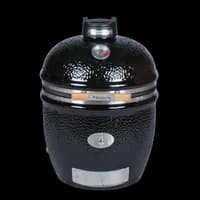 Monolith Classic Pro 2.0Good airflow control to hold 130 °C for four hours with a St. Louis rack.
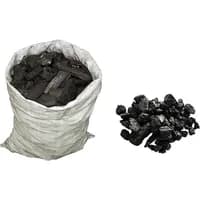 Orework Spanish Holm Oak Charcoal 15 kgHolm oak charcoal with long-lasting embers to stay steady for the four hours.
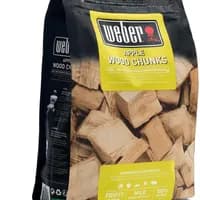 Weber Apple Wood Smoking Chunks 1.5 kg
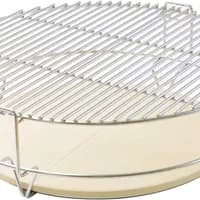 Onlyfire GCG-8552 Cooking System (2 grates + rack + 2 deflectors) for Large Kamado
 ThermoPro TP25 Bluetooth thermometer, 4 probesMonitor the chamber and the rack at 130 °C without lifting the lid.
Method
- 01
Remove the membrane
Slide a knife under the silver membrane on the back and pull it off with a paper towel. Without this the rub does not penetrate and ribs stay chewy.
- 02
Binder and rub
Brush with a thin coat of mustard (no flavour, just adhesion). Dust the rub generously on both sides.
- 03
Smoke 3h
Stabilise the kamado at 130°C indirect, add the wood chunks and load the ribs bone-side down. Smoke for 3 hours.
- 04
Wrap 1h
Spread butter, apple juice and brown sugar on foil. Wrap the ribs inside and return to the kamado for 1 hour.
- 05
Glaze
Unwrap, brush with barbecue sauce and return to the kamado uncovered for 30 minutes so the glaze sets.
- 06
Sear direct
Open all vents and push to 260°C. Move the ribs over direct heat for 60-90 seconds per side to caramelise.
- 07
Rest and cut
Rest 10 min. Cut between the bones. A perfect rib bends 30° without snapping — if it snaps, it is overcooked.
About this recipe
The 3-1-1 method tuned for the kamado: 3 hours smoking, 1 hour wrapped with butter and apple juice, 30 minutes open with glaze and a final sear over direct heat, 60-90 seconds a side.
Will it fit your kamado?
Small
33-40 cm · Joe Jr, MiniMax
Tight
The ~40 cm racks won't fit whole: halve them or use a vertical rack; probably one rack.
Medium
46-51 cm · Classic, Large
Tight
Two racks are a tight fit; you may need to halve them or use a rib rack.
Large
56-61 cm · Big Joe, XL
Fits
Both racks fit whole, lying flat.
What to serve with it
Sides
- Cast-iron skillet cornbread
- Elote-style grilled corn
- Creamy coleslaw
- Wine
- Garnacha red from Campo de Borja or Calatayud
- Beer
- Amber ale or IPA
- Alcohol-free
- Peach iced tea
Leftovers and storage
- In the fridge
- Cut into ribs, airtight within 2 h: 3-4 days in the fridge.
- Freezing
- Freeze well wrapped for 2-3 months; thaw in the fridge, never refreeze.
- Reheating
- In foil with a splash of apple juice at 130 °C to 74 °C; brush with sauce and crisp up.
- Using them up
- Pulled off the bone into tacos or a sandwich with BBQ sauce.
Cool and refrigerate within 2 hours. When in doubt, throw it out.
Leftover embers
You still have embers: what to do with the leftover heat
For 4 h 30 min at 130 °C in a classic kamado you load about 1 kg of charcoal and burn 700 g: when you serve, about 300 g of live embers remain. Before you shut the vents, that is still enough for:
Without touching the vents
130 °Ca short smoke
2 h 5 minof embers
- Hot-Smoked Whole Mackerel on the Kamado45 min · 120 °C
No recipe needed
- Coarse salt on a tray, with a wood chunk: smoked salt for months (1-2 h)
- Almonds or walnuts on a rack (45 min)
- Whole heads of garlic, for spreading (1 h)
Opening the vents halfway
140-200 °Cdessert while you eat
50 minof embers
- Kamado-Roasted Squash with Honey and Pimentón de la Vera45 min · 200 °C
- Smoked skillet brownie on the kamado, fudgy centre35 min · 175 °C
- Chestnuts and Sweet Potato Roasted in the Kamado Embers45 min · 180 °C
No recipe needed
- Yesterday's bread with oil and garlic, on the grate (10 min)
- Corn cobs in their husks (30 min)
- Whole apples with a slit in the skin (45 min)
Before opening the lid, crack it open for a few seconds first; if you raise the heat, stir the ash so the coals can breathe. And if you are not going to use them: once the food is out, close the bottom and top vents. The charcoal that does not burn (about 300 g) can be used next time. Different size of kamado? Work out your load for 5 h of fire, lighting included.
History of the dish
- Origin
- St. Louis, Missouri (United States)
- Period
- 20th century; standardised by the USDA in the late 1980s
- Where it is cooked today
- Across the United States, in butchers, supermarkets and rib shacks; in St. Louis, grilled and then sauced
"St. Louis-style" ribs are not a recipe but a cut: pork spare ribs with the sternum, costal cartilage and rounded tip removed, leaving a roughly rectangular rack. Why it bears the name is undocumented, the National Pork Board told the St. Louis Post-Dispatch in 2011. The most quoted account comes from a retired local butcher: from the 1930s to the 1960s, local packers trimmed the slab that the big packers sold with a heavy collar of bone and gristle.
The name became official in the late 1980s, when an agency of the US Department of Agriculture was drafting its Institutional Meat Purchase Specifications (IMPS). A survey showed that most people called the piece a "St. Louis cut", and so it was enshrined as "Pork Ribs, St. Louis Style", standard 416A, derived from the 416 spare rib: cutting through the costal cartilage lets each rib be removed with a simple slice between the bones.
In the city itself, "St. Louis-style barbecue" usually means "grilled, then sauced" rather than dry-rubbed and slow-smoked, with a tomato-based sauce on the sweet side.
Sources
- St. Louis-style is a hit with rib lovers — St. Louis Post-Dispatch (Joe Bonwich, STLtoday, 28-06-2011; copia de Internet Archive) (web.archive.org)
- 416A Pork Spareribs, St. Louis Style — Meat Science, Texas A&M University (meat.tamu.edu)
- Ask George: What is St. Louis-Style Barbecue? — St. Louis Magazine (stlmag.com)
Editor's tips
- Forget the "fall off the bone" test: a perfect rib holds together, it does not drop off.
- For sweeter ribs double the brown sugar in the wrap. For more bite skip the final glaze.
Gear for this recipe
As an Amazon Associate, mikamado.es earns from qualifying purchases. At no extra cost to you.

Monolith Classic Pro 2.0
Good airflow control to hold 130 °C for four hours with a St. Louis rack.
€2,000

Orework Spanish Holm Oak Charcoal 15 kg
Holm oak charcoal with long-lasting embers to stay steady for the four hours.
€45

Weber Apple Wood Smoking Chunks 1.5 kg
€14

Onlyfire GCG-8552 Cooking System (2 grates + rack + 2 deflectors) for Large Kamado
€90

ThermoPro TP25 Bluetooth thermometer, 4 probes
Monitor the chamber and the rack at 130 °C without lifting the lid.
€65
Have you made it?
Tell us how it turned out on your kamado. We review every rating before publishing it.
No published ratings yet. Be the first!
FAQ
Is the 3-2-1 rule right or too long?
3-2-1 (3h smoke, 2h wrapped, 1h sauced) is the American textbook. It works, but leaves the meat very soft — some prefer more bite. A more sensible version: 4h smoke at 110°C no wrap, 30 min sauced at the end. Simpler, ribs with more texture, fewer steps.
Remove the silver membrane from the bone side?
Yes, always. The membrane is impermeable to smoke and rub, so the bone-side meat ends up bland if you leave it. Slide a spoon under one corner, grab with paper towel, pull. 30 seconds of work, real flavour difference. No excuse to skip it.
Sauce at the end or from the start?
At the end, the last 20-30 minutes. If you sauce from the start, the sugar in the BBQ sauce burns and turns bitter. The rub (low or no sugar) goes on from minute one — it builds flavour through the first 3 hours. Sauce is the final layer.
How heavy is a rack for 3-4 people?
A St. Louis rack of 1.2-1.8 kg, depending on the trim (the ones in this recipe are around 1.2 kg), feeds 3-4 as a main. With generous sides, up to 5. For 6+ guests, two racks. Cooking two at once is no extra effort — same time, the kamado has the room.
Can I make this recipe with a different cut instead of pork ribs?
Pork belly and beef ribs keep the 120 °C smoke; pork shoulder does too, but it turns into pulled pork. In every case the probe decides, not the clock.
What do I do with the embers left after making St. Louis-style ribs on the kamado?
After 4 h 30 min at 130 °C in a classic kamado about 300 g of live embers remain: 2 h 5 min more at 130 °C without touching the vents or 50 min at 140-200 °C opening the vents. If you are not going to use them, close both vents and keep the charcoal for next time.
More kamado recipes
KEEP READING
Go deeper on this dish
- Recommended kamado
Monolith Classic Pro 2.0
Good airflow control to hold 130 °C for four hours with a St. Louis rack.
- Editorial guide
How to light a kamado: the step-by-step method
No petrol, no weird tablets and no 45-minute waits. The cone method, airflow control and the mistakes that prevent 80% of the frustration.
- Glossary term
Heat deflector
Ceramic plate placed between the coals and the grate to turn direct fire into indirect cooking.
- Related comparison
kamado joe classic iii vs monolith classic pro 2 cart
The comparison every European cook eventually makes: the Kamado Joe Classic III, the US reference with SlōRoller, again…