Analysis by Valery Grin · · updated May 28, 2026
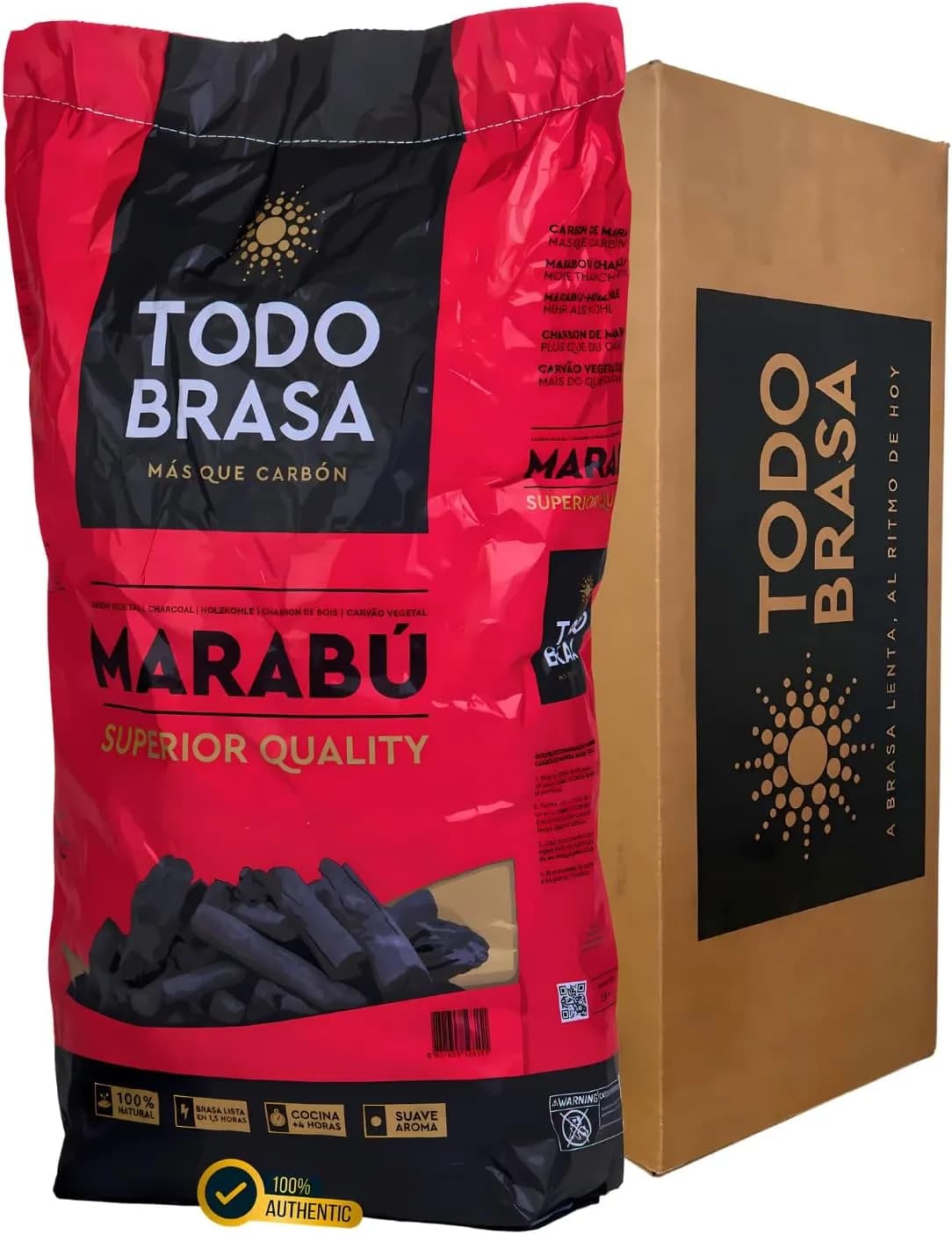
TODOBRASA Premium Marabú Charcoal 10 kg
Cuban marabú, ultra-dense hardwood, restaurant-grade heat
From€49
Reference price on Amazon (June 2026) · subject to change
Amazon does not have it available right now
We checked on September 21. The review stays up because it is still useful for comparing, but it cannot be bought on Amazon.es today.
As an Amazon Associate, mikamado.es earns from qualifying purchases. At no extra cost to you.
The Cuban secret TODOBRASA imports in 10kg sacks. Marabú: an invasive shrub turned into ultra-dense charcoal — different from common hardwood lump. Extreme temperature peaks, very fine ash, no sparks. Used by steakhouses.
Marabú (Dichrostachys cinerea) is one of the rare cases where a plant invasion turns into a premium export: the Cuban state controls cutting and traditional-kiln carbonization under phytosanitary oversight. Wood density even beats white quebracho, so the lump burns hotter and cleaner than common hardwood. TODOBRASA is the dominant Spanish importer and repackages it in 10kg bags for the steakhouse and kamado circuit.
Density far above holm oak — the lump to reach for when you need extreme searing and long-lived embers.
Editorial rating from spec sheet, measurements and kamado fit · not a hands-on test
Pros
- 100% natural Cuban marabú, no chemicals or binders
- Density above quebracho — very high temperature peaks
- Fine white ash, no sparks, no sulfur
- Neutral aroma: lets smoking chunks lead the flavour
Cons
- Slow to light — a chimney starter is practically mandatory
- Patchy supply — Cuban shipments reach Europe in waves
Who it's for
For extreme searing and long roasts: ribeye, octopus, lamb. For domestic steakhouses and open kamados needing strong, durable embers.
Not for
If you only do long, budget smokes — beech briquettes give better euros-per-hour in that range.
As an Amazon Associate, mikamado.es earns from qualifying purchases. At no extra cost to you.
Goes well with
FAQ
What kind of cooking is marabú charcoal best for?
Marabú reaches very high peak temperatures and holds an intense bed of embers, so it shines for searing and direct grilling that demand serious heat: thick steaks, marked ribs or full-blast pizza. It also handles long cooks well, since its density extends burn time beyond a typical lump charcoal.
Does marabú produce a lot of ash in a kamado?
No. One of its biggest advantages is that it leaves very fine, minimal ash, which is ideal in a kamado: the ash won't choke the lower air vents or force you to empty the chamber mid-cook. You'll clean less and keep airflow stable throughout the whole session.
How does marabú differ from typical holm-oak lump charcoal?
Marabú is an invasive Cuban shrub turned into a charcoal far denser than common holm-oak lump. That density means higher peak temperatures, a longer burn and less ash. It's a performance charcoal, not a filler, made for anyone chasing the maximum out of their kamado.
Is a 10 kg sack of marabú worth it versus other charcoals?
If you cook often and demand high temperatures, yes: the 10 kg sack stretches further thanks to its density and low ash, so it lasts longer than the weight suggests. For long burns and intense searing it's among the best on Amazon.es; for the occasional gentle cook, a lighter lump is enough.
YOU MIGHT ALSO LIKE
Go deeper
- RECIPE
Crispy chicken wings on the kamado with honey and Pimentón de la Vera (crackling skin, no frying)
Glass-crisp skin without a fryer: dry brine with baking soda, indirect at 200°C with appl…
- RECIPE
Grilled provolone on the kamado with tomato, oregano and olive oil, in a cast-iron skillet
Argentine-style provoleta over direct heat: a wheel of provolone in a cast-iron skillet a…
- KAMADO
Big Green Egg Large
The classic kamado that defined the category